

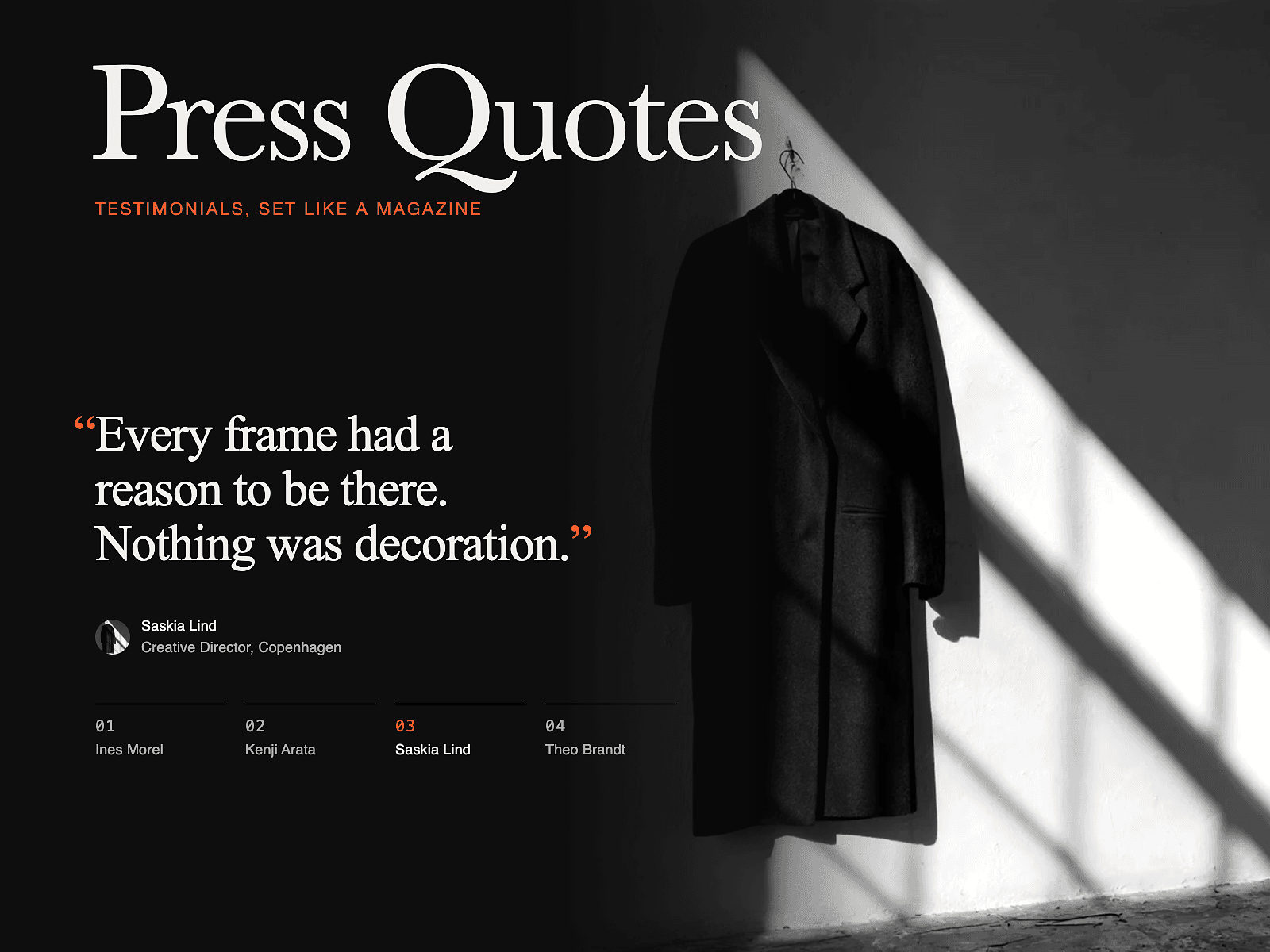
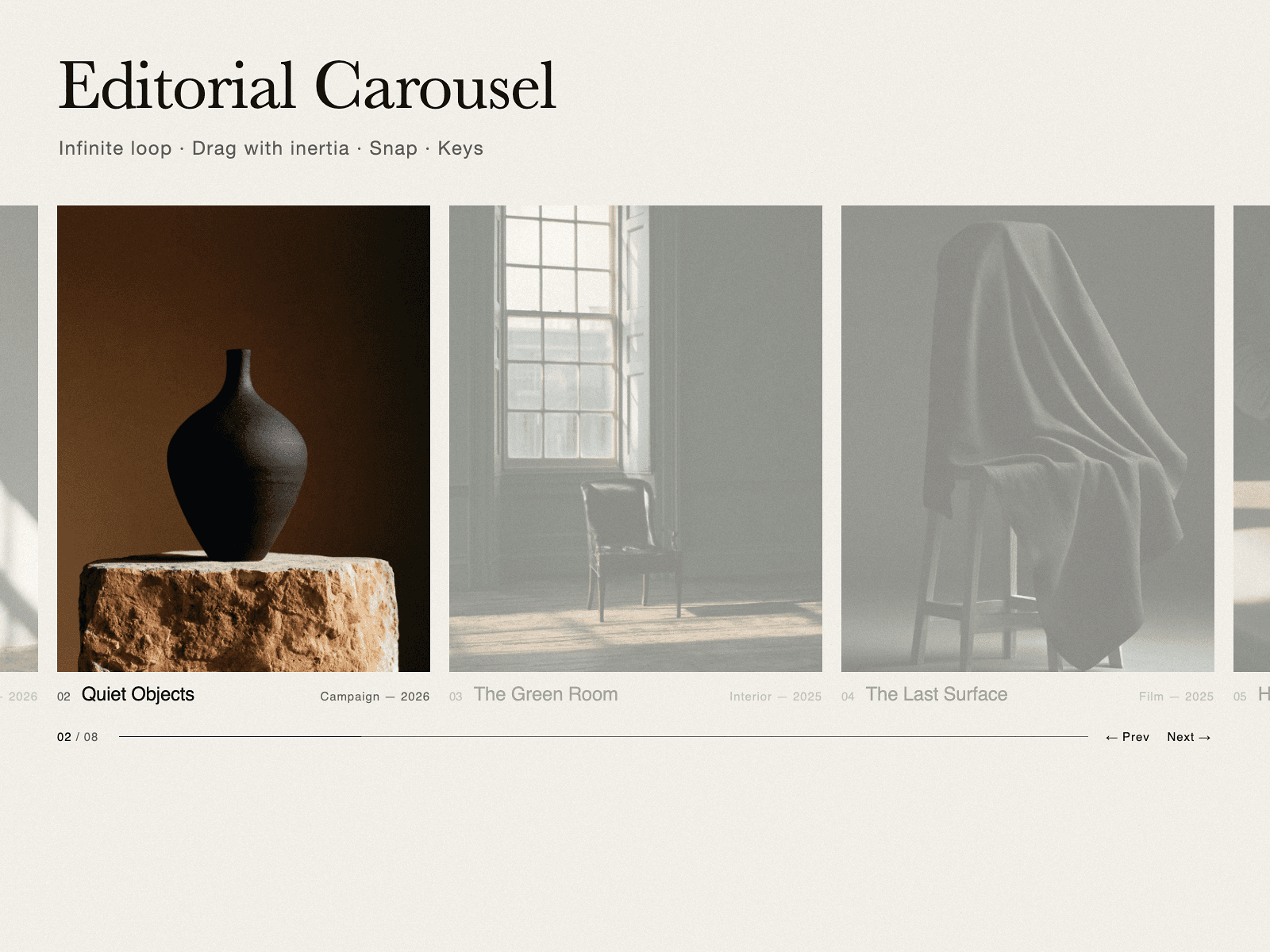
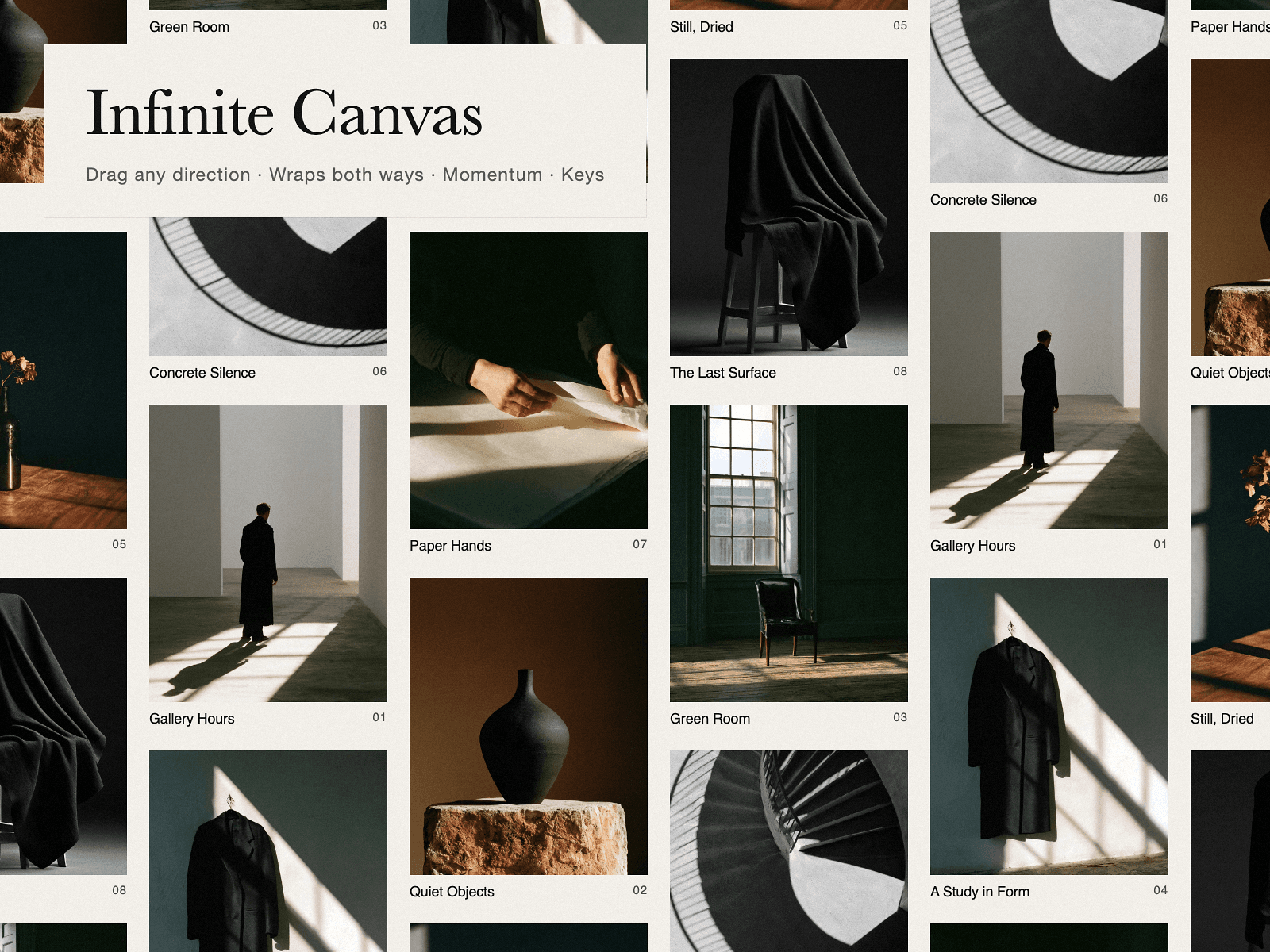
Before / After is out. A compare slider with a hairline divider - drag, click or hover, horizontal or vertical, and it moves with the arrow keys. Labels in any font, readable on light and dark photos. Ships with a graded / ungraded demo pair.
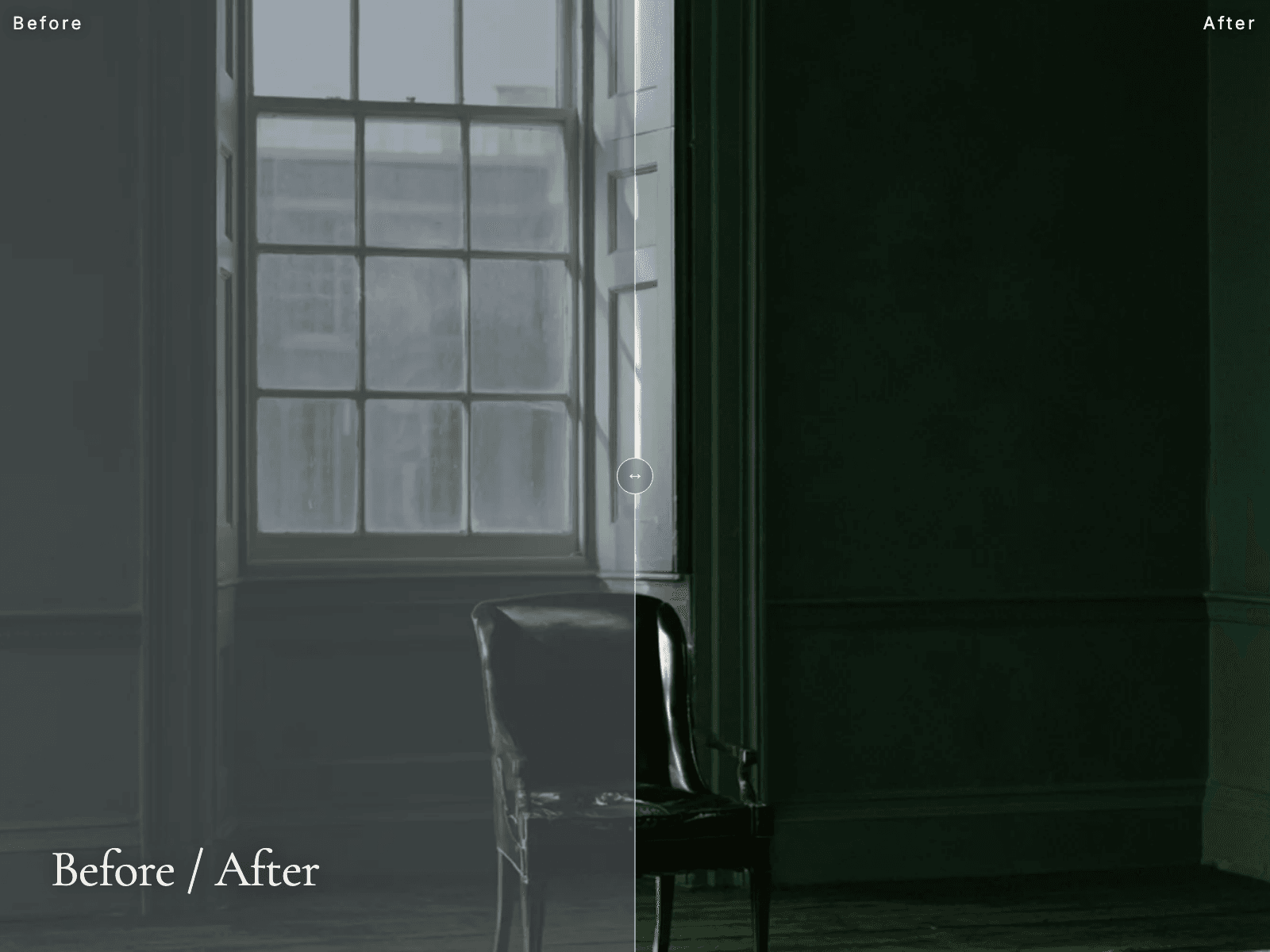
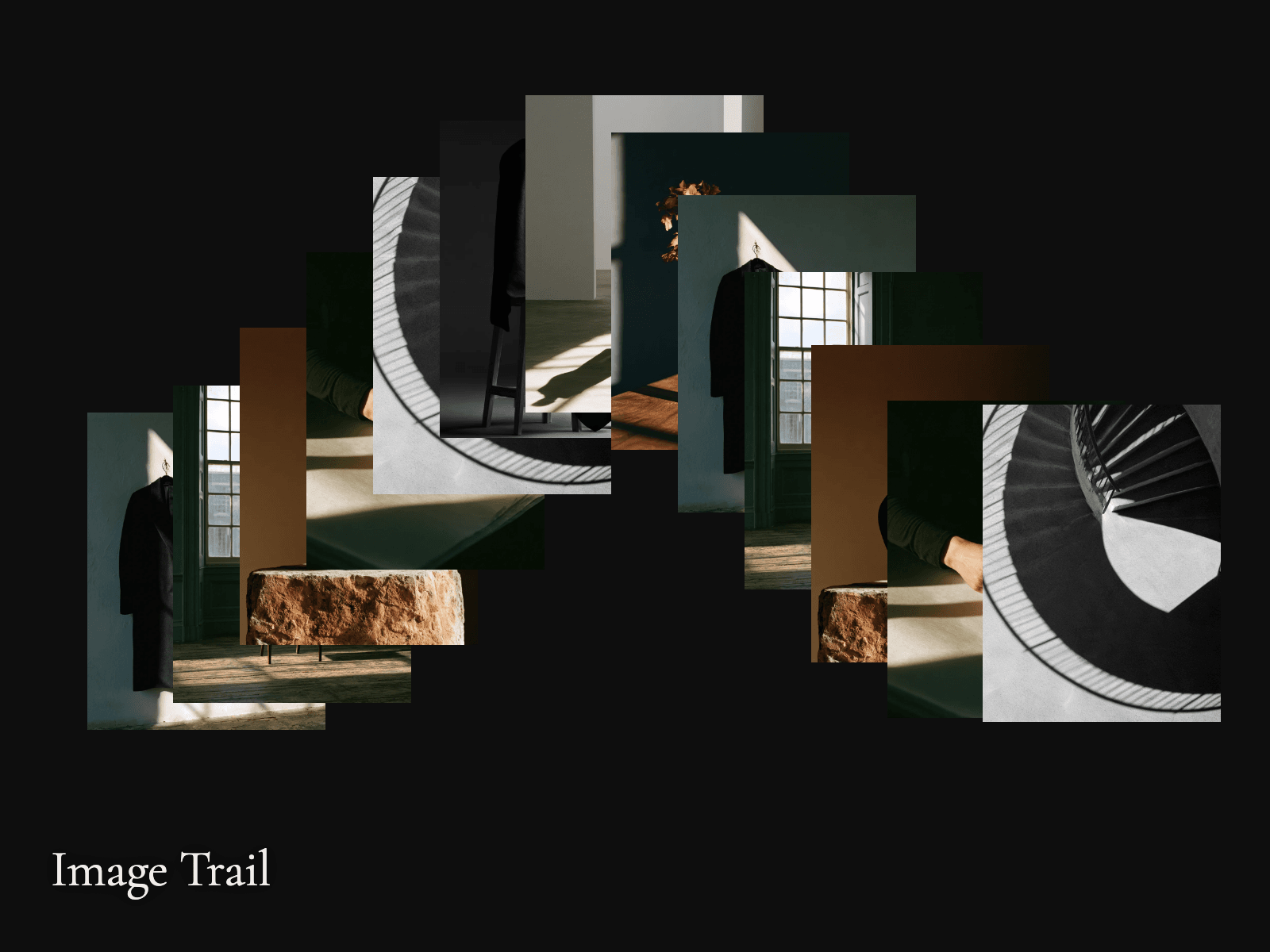
Image Trail is out. The cursor leaves a trail of photographs - an image is dropped only after the pointer travels a set distance, so a slow hand leaves a slow trail. Tilt, mono, caption, life and spacing in the panel. Ships with eight demo photographs.
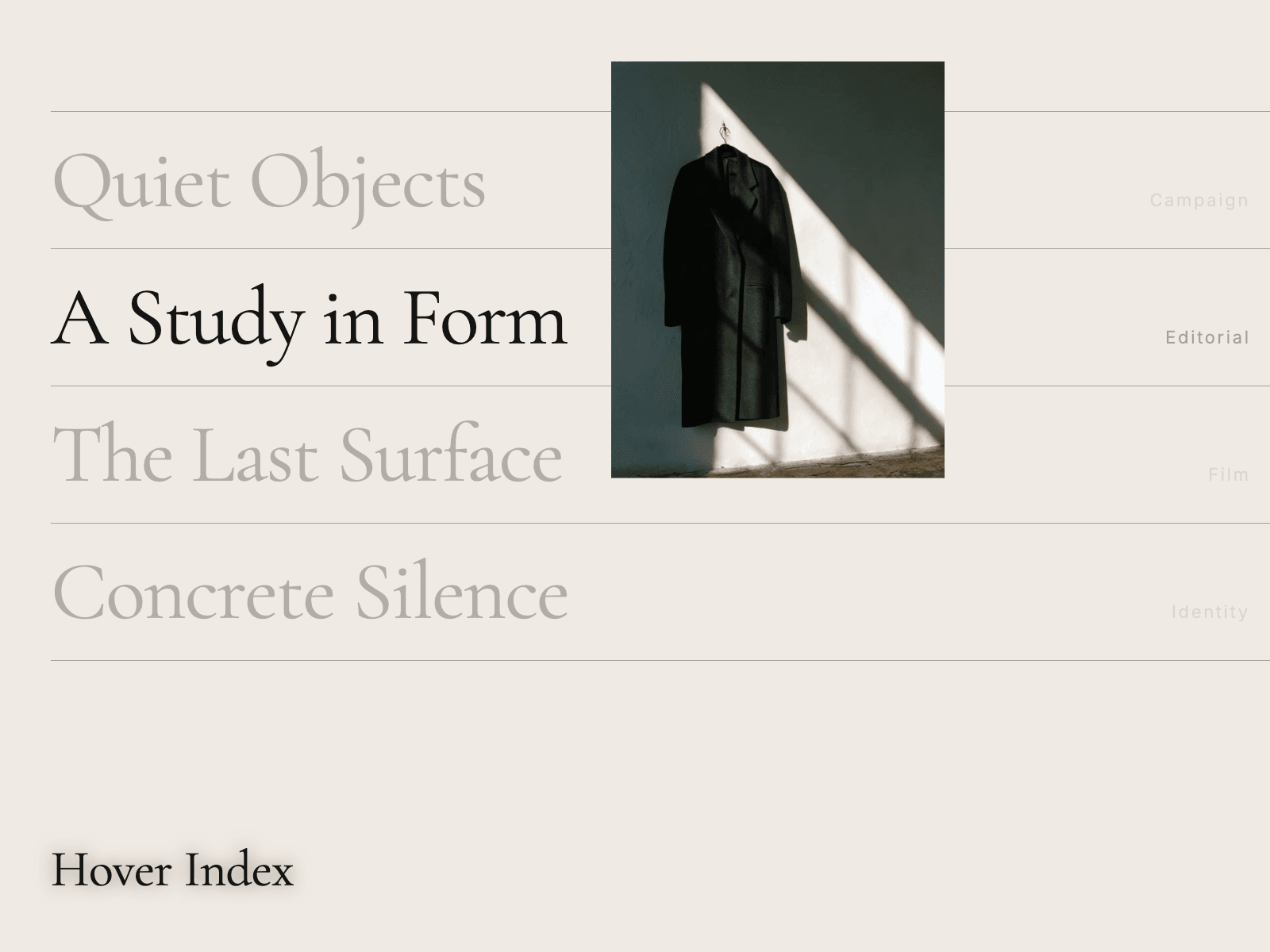
Hover Index is out. The editorial project list: hover a row and its image follows the cursor, easing behind it, while the other rows dim. Rows are real links, keyboard focus shows the image too, and touch screens get a plain list.
KHZ ART3w
The place a Japanese page gives itself away fastest is a two-line heading with one character alone on the second line.
In print that is caught by hand every time. On the web nothing catches it, so it ships, and the heading reads slightly broken to a native reader who will never write to tell you why.
Headings are where to look first if you only have five minutes: https://khz-art.com/en/framer-japanese
KHZ ART3w
It is not only Japanese. Simplified and Traditional Chinese have no spaces between words. Neither does Thai. The browser wraps all three wherever the box happens to end.
If you are shipping to those markets from Framer, the layout you approved in English is not the layout your reader sees.
We handle line breaking for Japanese, Chinese and Thai in one pass on the published site: https://khz-art.com/en/framer-japanese
KHZ ART3w
A translation plugin moves the words. It does not move the typography.
That distinction is invisible in Latin languages, because the rules are the same on both sides of the swap. In Japanese they are not: the browser has no idea where a phrase ends, so it wraps mid-name and mid-number, and no amount of correct translation fixes it.
So there are two jobs, not one. The second one is written out here, with before and after: https://khz-art.com/en/framer-japanese
KHZ ART3w
A question worth asking before you hand the Japanese version of a site to anyone: ask them what they do about line breaking.
If the answer is "the browser handles it", they have not built a Japanese page before. It does not.
We wrote down everything we check, so you can use it as a checklist whether or not you work with us: https://khz-art.com/en/framer-japanese
KHZ ART3w
Some Japanese words cannot be read on sight — a family name, a place, a technical term. Print solves it with small characters set above the word. It is called furigana, and Chinese does the same thing with pinyin.
The web has had a tag for it since 2001 and almost no design tool exposes it.
If your Japanese page needs to be read by someone who is not already fluent, this is the piece: https://khz-art.com/en/framer-japanese
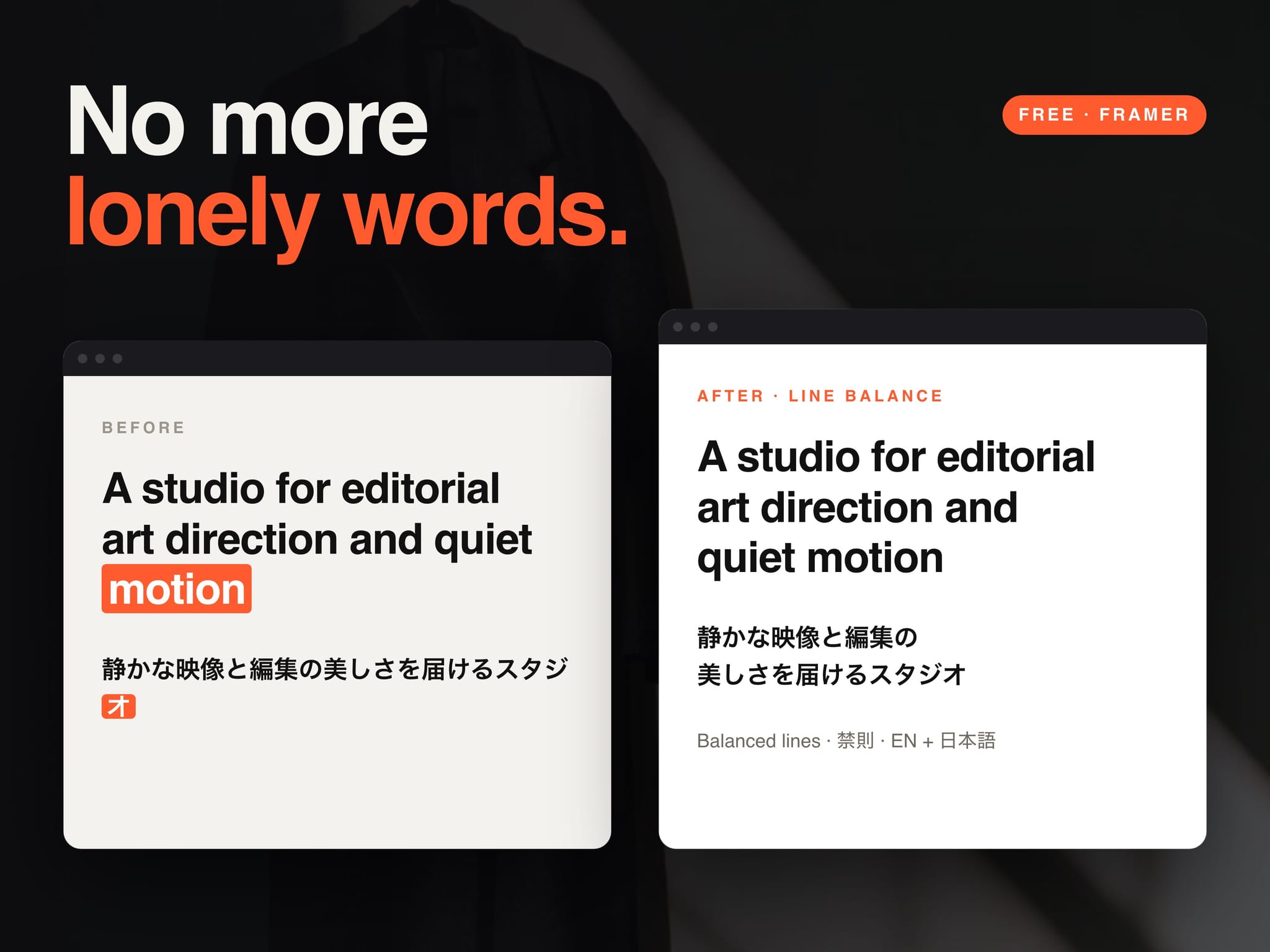
Line Balance is out, free. It fixes the three ways a headline breaks: a single word falling to its own line, lines of wildly different length, and — in Japanese — a line that starts with 、 or ). Measured over 90 headlines in Chromium: widows 24.4% to 1.1%, line-width SD 109px to 25px. No dependencies, no network, no animation.
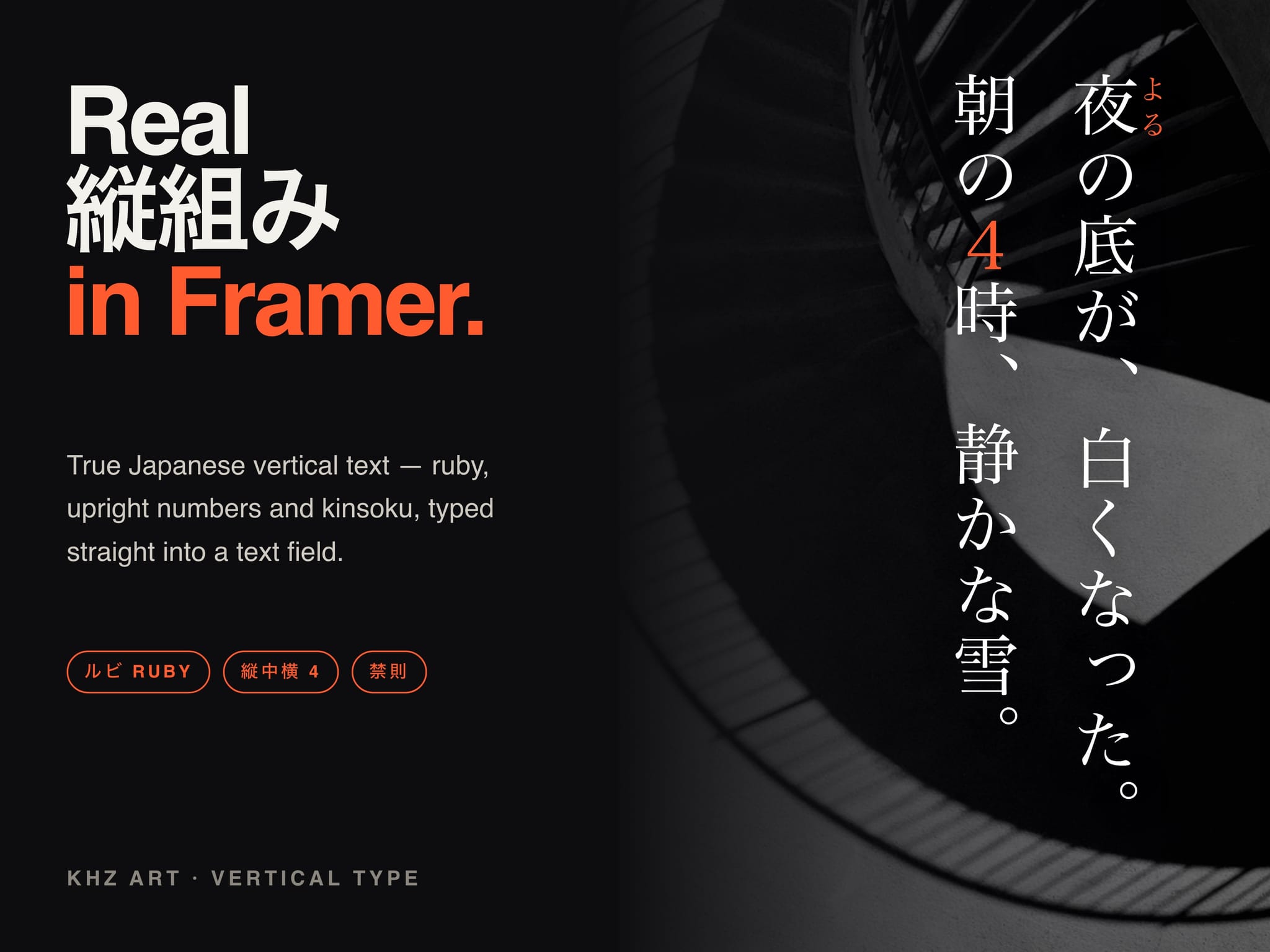
Vertical Type is out. It sets real Japanese tategaki in Framer — text top to bottom, columns right to left — with ruby written inline as 漢字《かんじ》, digits standing upright inside the line (4時, 2026年), kinsoku line-breaking, and emphasis dots. No dependencies, no network requests. Live preview on the listing.
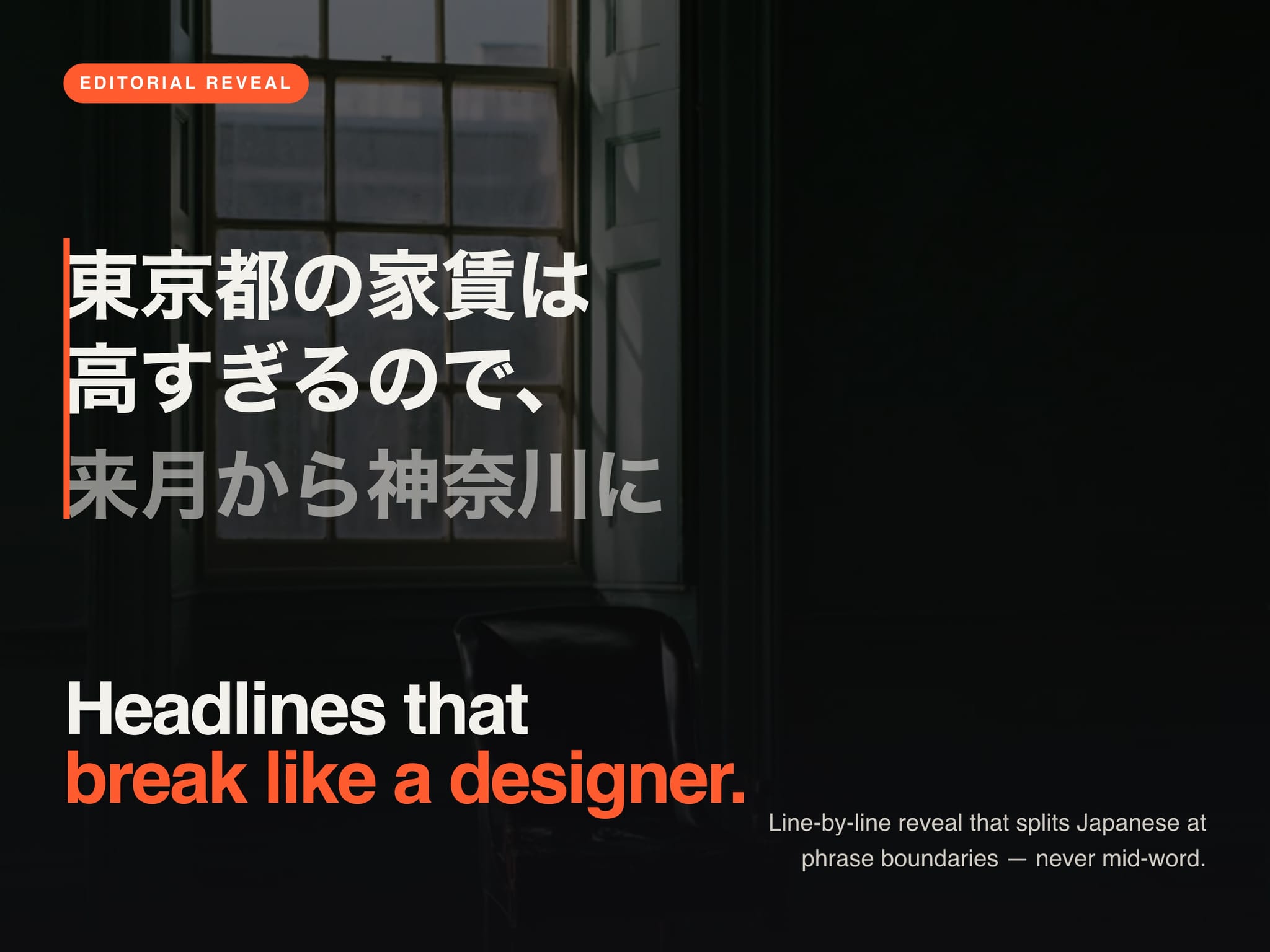
Editorial Reveal is out. It brings text in line by line — and it breaks Japanese and Chinese lines at phrase boundaries instead of wherever the box happens to end. Latin text keeps normal word wrapping. No dependencies, no network requests. Live preview on the listing.
KHZ ART1mo
Japanese has no spaces between words, so a browser is free to break a line anywhere — including in front of a closing bracket, a comma or a full stop. Japanese typesetting does not allow those characters to start a line.
We built a page that counts it instead of arguing about it. Paste any Japanese into it and it reads the line boxes your own browser just drew, then reports two numbers: how many lines began with a character that may not begin a line, and how many Latin words were broken mid-word. Drag the column width or the type size and watch the numbers move.
https://khz-art.com/en/japanese-line-break-test
If your site needs this fixed, the three plugins behind it are free on the Marketplace — Kumihan (phrase-aware line breaking, ja / zh-hans / zh-hant / th), Rubi (a reading above a word), Waei (the quarter-em of air between Japanese and Latin). In English they do nothing at all.
KHZ ART1mo
Japanese has no spaces between words, so a browser breaks a line wherever it runs out of room — mid-phrase, mid-name, mid-number. To a native reader, that one break is what makes a beautiful site look unfinished.
We rebuilt the Kumihan page today to show it in real type: browser default above, phrase-aware breaking below. The same for 简体中文, 繁體中文 and ไทย.
Free for headings. $25 once for the whole page.
日本語の改行を、文節で。
KHZ ART1mo
If you are shipping a multilingual Framer site, the translation is the easy half.
The hard half is what happens to the layout afterwards. German runs long and breaks your buttons. Japanese has no spaces and breaks your line endings. Thai has no spaces either and breaks differently again.
We only solved the CJK side of that, because it is the side nobody else has: https://khz-art.com/en/framer-japanese
KHZ ART1mo
In Japanese typesetting there is a rule that a line may not begin with a closing bracket, a small kana, or a full stop. Print has followed it for a century. The web ignores it.
The result is the thing you cannot unsee once you have seen it: a single punctuation mark alone at the start of a line, or one character stranded on the last line of a paragraph.
If you are building a Japanese page in Framer, this is what to look for first: https://khz-art.com/en/framer-japanese
KHZ ART1mo
One detail decides whether a Japanese page reads expensive or cheap: the quarter-em of space between Japanese characters and Latin ones.
Type has always put it there. Browsers never have. So a line like 2026年のKHZ ARTの映像 comes out jammed, and readers feel it without being able to name it.
It is a small fix and it changes the whole page. Free plugin, no account: https://khz-art.com/en/framer-japanese


